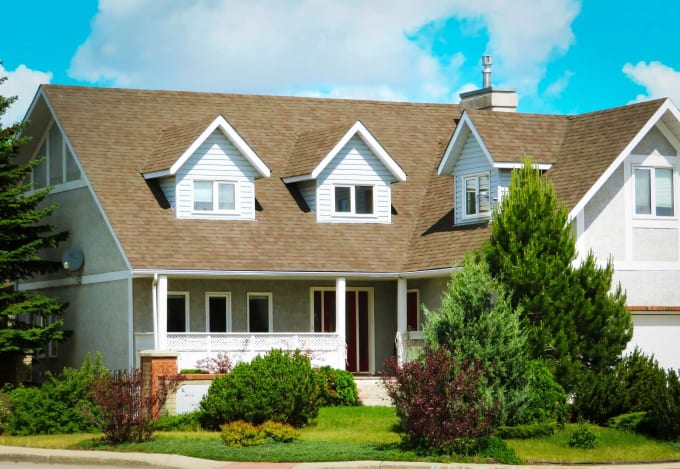
Few things make us happier than putting the first roof on a brand-new home. On this New Lenox build, the homeowner picked the colors and style themselves. On a new build, choose your roof color by looking at full-size samples outdoors, next to your actual brick, siding and trim, at different times of day. Here's how to get it right, and why how the roof goes on matters even more than how it looks.
The short version
- Pick the roof color against the fixed parts of your exterior: brick, stone, siding and trim. The roof is the one you'll live with longest.
- Look at full-size samples outside in morning, afternoon and evening light, and from the street. Small swatches and screens can mislead.
- Check subdivision covenants or HOA rules before you fall in love with a color.
- Installation decides how long a new roof lasts. Ask how the builder's roofer handles underlayment, ice and water shield, flashing and ventilation.
What made this New Lenox new build special?
A new house is a blank canvas, and the roof is a big part of it. On this New Lenox home, the homeowner customized the colors and style of the roof to suit the house they were building. That's one of the best parts of new construction: it's your chance to make a house a home, from the street view on up.
We've been working with builders for more than 40 years, and our aim has always been to be the roofer they call first. No matter how complicated the roof, the goal is the same: quality that lasts. Plenty of roofers, as we like to put it, “throw up material and nail the wall.” We take the long view. How your roof is installed is what gives you peace of mind for decades to come.
How do I choose a shingle color for a new house?
Shingle manufacturers and experienced roofers give remarkably consistent advice:
- Start with what you can't easily change. Brick, stone and siding colors, plus window and door trim. Owens Corning suggests noting every hue on the exterior and the material of your trim before you look at shingles.
- Decide whether your palette is warm or cool. Cool palettes lean toward blues, greens and grays. Warm palettes lean toward reds, browns, tans and yellows. A roof color from the same family usually looks like it belongs.
- Look at real samples outdoors. Brochure photos and small swatches can mislead. Take full-size samples or a sample board outside in morning, afternoon and evening light, and lean them against the house.
- Step back to the street. A shingle that looks busy up close often reads as one blended color from the curb. Judge it from where the neighbors will see it.
- Look at finished roofs. Drive past homes with the colors you're considering. Better yet, browse Hamstra roofs in New Lenox and filter by color.
- Check the rules. Many subdivisions and homeowners associations set rules for roof colors or materials, and some want every home to match. Your builder or HOA can tell you what's approved.
Building in the southwest suburbs?
Call us to talk shingle colors, styles and what your builder's roof spec includes.
What roof styles can I choose from on a new build?
With asphalt shingles, the main choices are:
| Style | Look | Good to know |
|---|---|---|
| 3-tab | Flat, uniform rows | Simplest look and usually the lowest cost |
| Architectural (dimensional) | Layered, textured, shadowed | A popular choice on new homes, with a wide range of colors |
| Designer or luxury | Mimics slate or wood shake | Usually heavier and pricier; a strong statement on the right house |
Beyond shingles, a new build is the easiest time to add accents: metal on a porch or bay roof, decorative flashing, or copper details. We show some favorites in getting flashy with flashing.
What should I ask the builder about my new roof?
Color is what you see. What's underneath is what keeps you dry. On a new build, ask:
- Which shingle line and underlayment are specified? Builder-grade isn't always the same as the best option, and upgrades are easiest before the roof goes on.
- How far does the ice and water shield go? Code sets a minimum at the eaves. Our ice and water shield guide explains why we go further.
- How is the attic ventilated? Balanced intake and exhaust protects the shingles and helps prevent ice dams.
- Who handles service if something leaks in year one?
Who takes care of the roof after we move in?
We do the same work across the southwest suburbs, and our service technicians are quick on the heels of any storm, making sure you stay warm and dry. When you get a new roof, you should be able to trust that the people who built it have your interests at heart. Learn more on our new construction roofing page.
Want to see colors on real houses?
Browse Hamstra roofs by town and shingle color.
Questions we hear
How do I pick a roof color for a new house?
Start with the fixed parts of your exterior, like brick, stone, siding and trim, and decide whether your palette is warm or cool. Then look at full-size samples outdoors at different times of day and from the street before deciding.
Can my HOA tell me what color roof to put on?
Often, yes. Many subdivisions and homeowners associations have covenants that limit roof colors or materials. Check with your builder or HOA before you choose.
Should I upgrade the builder's standard shingle?
It can be worth asking. Builder specs vary, and upgrading the shingle line, underlayment or ice and water shield is easiest before the roof is installed.
Does roof color affect energy use?
Somewhat. Lighter shingles reflect more sun and darker ones absorb more heat. In the Chicago area, appearance is usually the bigger factor, but it can help break a tie.
Family-owned in Frankfort since 1978: estimators, service techs, crews and the office that keeps it all moving. Meet the team